

Our Vision
We imagine a community where confidence, not fear, shapes how people encounter the law—where faith, fairness, and knowledge supplant intimidation. By blending education, advocacy, and compassion, we aspire to uplift those most vulnerable to systemic inequities.
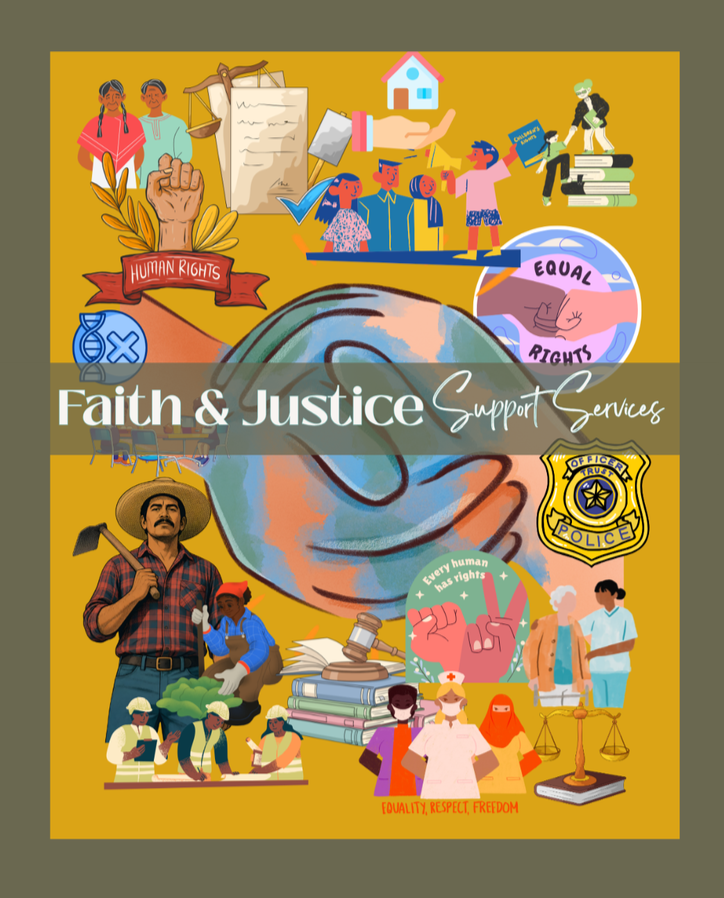
The Legal System and The Community:
Identified Needs and the Purpose of Faith & Justice Support Services
-
Even with Legal Aid services available, many residents—especially low-income families, immigrants, and people of color—struggle to understand their rights or access the support they need, such as:
• Long wait times for legal aid
• Limited availability of Spanish-speaking legal staff
• Fear of engaging with government or court systems
• Lack of understanding of basic legal concepts
• Uncertainty about legal fees or eligibility
• Digital access barriers (technology, internet, literacy)
Navigating the legal system can be confusing, intimidating, and emotionally exhausting. The complexity of legal processes often leaves people feeling overwhelmed and unsure of where to turn for help. As noted by the San José Public Library and regional community needs assessments, the demand for accessible, culturally competent legal information continues to grow across East San José neighborhoods.
-
Communities of color in East San José — particularly Latino and Black residents — experience higher levels of policing, criminal citations, and system involvement. Minor offenses can spiral into long-term consequences when individuals do not understand their legal options, rights, or obligations.
Criminalization also impacts entire families: parents may fear engaging with public agencies, youth may internalize shame, and households may struggle with court fines or probation requirements.
Our legal literacy programming helps families understand citations, records, court processes, and alternatives, reducing the harmful long-term impacts of system involvement.
-
Local data shows that Latino youth continue to be disproportionately represented in juvenile arrests, probation, and court involvement in Santa Clara County. Many families don’t understand how the juvenile system works — from diversion programs to probation conditions to school discipline rights — and therefore cannot advocate effectively for their children.
When parents lack information, system involvement becomes even more intimidating. We offer plain-language legal education so families can navigate juvenile legal processes, communicate confidently with courts and attorneys, and advocate for fair treatment.
-
Understanding how to request police reports, school records, or case files under the California Public Records Act can be overwhelming. Many residents do not know:
• what records they are entitled to
• how to submit a request
• how long agencies have to respond
• what exemptions mean
• how to appeal a denied request
This lack of knowledge leaves communities without crucial information for advocacy, housing stability, school discipline issues, and immigration matters.
-
Much of the legal system — from forms to court hearings — operates in complex English. Spanish-speaking families often rely on friends, court intermediaries, or inconsistent translations, which increases the risk of mistakes or misinformation.
Furthermore, many legal services are not culturally grounded. Families may feel judged, dismissed, or misunderstood when seeking help.
-
In immigrant and mixed-status communities, rumors and misinformation spread quickly — often through social media, community gossip, or informal advice. This can lead to:
• avoiding court dates out of fear
• misunderstanding tenant or employment rights
• believing police reports cannot be accessed
• assuming legal help is unaffordable
• relying on incorrect legal interpretations
Misinformation keeps families vulnerable. Our workshops dismantle myths and teach accurate, plain-language information so families can make informed decisions.
-
Generations of displacement, discrimination, racial profiling, and inequitable treatment have created deep distrust toward public agencies, courts, and law enforcement. Many East San José families feel unseen, unprotected, or disrespected when interacting with legal institutions.
This distrust leads to avoidance — avoiding reporting crimes, attending hearings, or seeking help when legal issues arise.
-
Our services are shaped by three realities:
1. Legal literacy is not a privilege — it is a necessity for community safety and stability.
2. Culturally rooted support improves legal outcomes. People are more likely to engage, ask questions, and advocate for themselves when resources reflect their culture, language, and lived experience.
3. Faith, compassion, and justice go hand in hand. Many community members find strength, hope, and clarity through faith‑based support alongside legal education.
By addressing these community needs, Faith & Justice Support Services aims to reduce disparities, break cycles of fear and misinformation, and create pathways toward justice, dignity, and empowerment for all families.
If you would like to collaborate, host a workshop, or support our mission, please contact us at:
“But let justice run down like waters and righteousness like an ever-flowing stream, flowing abundantly.”