
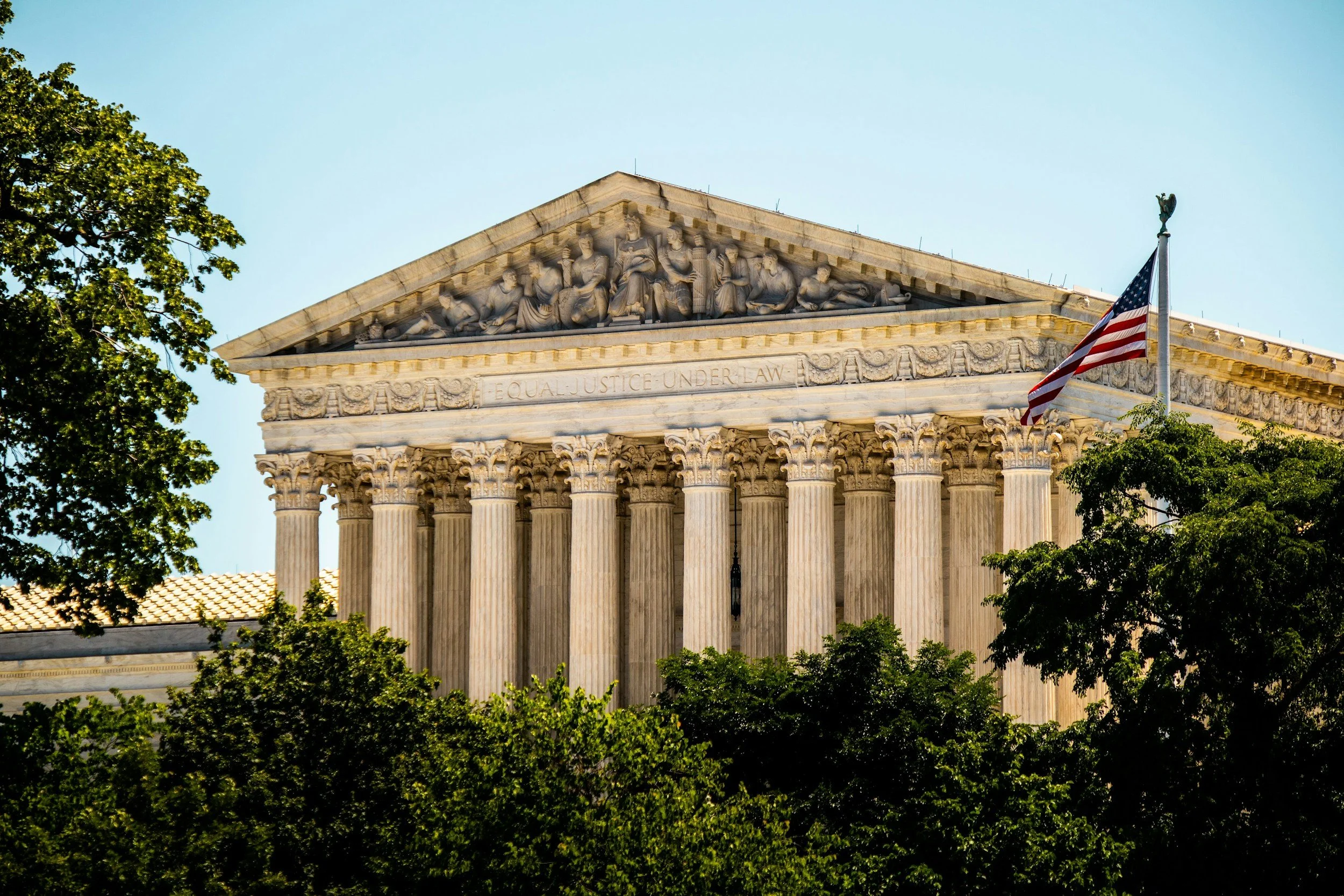
Legal Literacy Is a Human Right
Faith & Justice was created to ensure everyone has access to or an understanding of their most basic legal rights. We believe legal literacy is a human right — something every person deserves, regardless of background, education, or income. But what exactly is legal literacy?
A quick Google search led me to this insightful definition:
“Legal literacy is the ability to understand, interpret, and apply legal concepts and terminology to navigate the legal system effectively in one's daily life. It goes beyond just knowing laws; it’s about being able to recognize potential legal issues, understand one’s rights and responsibilities, and know where and how to seek appropriate legal assistance when needed.”
In simple terms, legal literacy means knowing the rules we all live under — the boundaries, the protections, and the responsibilities that shape our everyday lives. It also means recognizing when something isn't right, when the law isn’t being applied correctly, or when your rights are being ignored.
Think of it the way a baseball fan understands the game. They know the purpose of the bases, how innings work, and why umpires are there: to enforce the rules, settle confusion, and ensure fairness. Even without being professional players or coaches, fans understand enough of the rules to follow the game, question a call, or recognize when something doesn’t seem fair.
In this country, we also have a set of “rules” — our fundamental laws. But unlike baseball, many people have never been taught them. Somewhere along the way, we became disconnected, discouraged, or even deliberately excluded from understanding how the legal system works. Maybe the rules felt overwhelming. Perhaps no one explained them in a way that made sense. Or maybe someone made you believe you weren’t allowed to ask questions at all.
Current Barriers Our Community Faces
As a result of the darker side of our history and long-standing racial divides, this disconnect and discouragement have created serious barriers in our communities. These barriers have weakened trust in government institutions, police agencies, and the court system — not because our people don’t care, but because they were never given the tools to engage with these systems confidently or safely.
Some of the most common barriers include:
• Language barriers that make legal processes confusing or inaccessible
• Fear, rooted in personal or generational experiences with authority
• Intimidation from complex laws, paperwork, or court procedures
• Lack of access to reliable, culturally competent resources
These barriers make it harder for individuals and families to understand their rights, ask questions, or seek help when they need it most.
Why Legal Literacy Matters
Legal literacy matters because it helps us navigate the everyday issues that shape the foundation of our lives — housing, employment, immigration, education, family stability, and even our financial well-being. These are not abstract concepts; they are the real-life situations where people are most vulnerable to being misled, overlooked, or taken advantage of. Yet these are also the areas facing harmful funding cuts, predatory practices, misinformation, and policies that disproportionately hurt Latino and low-income communities.
Without an understanding of our rights, even simple tasks can become overwhelming. A letter from a landlord can feel like a threat. A meeting with a school administrator can feel intimidating. A traffic stop can spark fear instead of clarity. Legal literacy transforms these moments into opportunities for confidence rather than confusion.
When we don’t know our rights, there is a ripple effect:
Fear replaces confidence
Silence replaces advocacy
Avoidance replaces informed decision-making
People stay quiet when they should speak up. They accept unfair treatment because they believe they have no other options. They avoid seeking help because the legal system feels too complicated, too intimidating, or too far removed from their lived experiences.
But when individuals are equipped with knowledge — even the basics — everything changes. Legal literacy doesn’t turn people into lawyers; it empowers them to recognize when something isn’t right, to ask questions, and to take the first step toward protecting themselves and their families.
Cultural and Historical Context
To understand why legal literacy is so crucial for Latino and POC (People of Color) communities, we must acknowledge the cultural and historical experiences that have shaped our relationship with the law. For many families, the legal system has never felt like a place of safety or fairness. Instead, it has often been associated with fear, punishment, uncertainty, or exclusion. These explanations were not created overnight; they have been shaped over generations by stories, experiences, and lived realities.
Many Latino households grew up with unspoken rules:
Don’t make noise.
Don’t ask questions.
Don’t attract attention.
These messages were often meant to protect us, not silence us. Our parents and grandparents did the best they could with the information they had. For many, survival depended on staying invisible, compliant, or quiet when confronted with authority. Over time, this created a deep cultural instinct to avoid legal systems altogether.
Layered onto this is the fact that many of us come from countries where the law was inconsistent, corrupt, or weaponized against everyday people. Even when we arrive in the United States, that inherited caution doesn’t disappear; instead, it follows us, shaping how we interpret authority figures, courtrooms, and legal documents.
This history explains why our community often feels intimidated, anxious, or unprepared when dealing with legal matters — and it’s not a reflection of intelligence or willingness. It is the natural outcome of years spent on the outside of institutions that were never designed with our experiences in mind.
But acknowledging this context is not about dwelling on the past. It is about understanding the starting point. When we name the reasons for our fear or hesitation, we can begin to unlearn them. We can replace silence with knowledge, intimidation with understanding, and uncertainty with confidence.
Legal literacy becomes not just an educational tool but a cultural shift — a way to rewrite our story so the next generation approaches the law not with fear but with clarity and empowerment.
What Legal Literacy Looks Like in Practice
In practice, this is where Faith & Justice comes to life. Our goal is to create a safe, welcoming space where questions are encouraged, not dismissed — a place where no one feels embarrassed for not knowing legal terms, processes, or their rights. We want our community to feel seen, supported, and respected as they learn.
Legal literacy is not something people are expected to figure out on their own. That’s why we are committed to building a network of trusted professionals — attorneys, advocates, social workers, notaries, educators, and community partners — who are willing to engage with our community in culturally competent, compassionate ways. When someone comes to us with a question or a concern, we want to ensure they are connected to the right person, the right resource, or the right organization.
Our goal is simple: to make the law work for us, not intimidate us. To accomplish this, Faith & Justice will offer:
• Workshops that explain legal concepts in plain language
• Advocacy and support for individuals who feel lost navigating a legal issue
• Printable resources, including guides, glossaries, checklists, and one-page explainers
• Community referrals to professionals who can provide deeper assistance
• Partnerships with churches, nonprofits, and community centers
• Safe, judgment-free spaces for learning and asking questions
Legal literacy becomes powerful when people have access to clear information, trusted guidance, and a community that empowers them rather than shames them. That is the heart of Faith & Justice — a place where knowledge leads to confidence, and confidence leads to change.
How Faith & Justice Support Services Is Responding
We are committed neighbors who want to support our community. We give back because we are the result of prayerful parents who sacrificed so we could learn, grow, and stay anchored in our values. Their dedication shaped us, and now it is our turn to step in where no one else has. We understand our community’s history — the cultural wounds, the quiet fears, and the daily struggles — because we have lived them too.
Our approach is simple: to fill the gaps where injustice has thrived for far too long.
· The gaps created when people are unsure of their rights.
· The gaps created when fear replaces understanding.
· The gaps created when our community feels alone in navigating systems that were never made accessible to us.
In light of our cultural history and the current climate, Faith & Justice aims to bring much-needed healing. Healing is where empowerment begins. When we heal, we learn to advocate for our loved ones with confidence. We stop shrinking back from legal processes and start approaching them with clarity instead of fear.
Our mission is to walk with our community — providing knowledge, support, and culturally rooted guidance — so no one has to face the legal system feeling unprepared or unseen.
Call to Action
Legal literacy is more than information — it is a pathway to dignity, confidence, and justice. For too long, our community has been expected to navigate complex systems without support, without guidance, and without the basic tools needed to protect ourselves and our families. But that season is coming to an end.
Faith & Justice was created with a simple belief: when our community understands the law, we are no longer intimidated by it. Knowledge makes room for courage. Courage makes room for advocacy. And advocacy makes room for real, lasting change.
As we prepare to launch officially in January 2026, we hope to walk beside you every step of the way. We look forward to offering workshops, resources, referrals, and a safe place to ask questions — all designed with our community’s culture, values, and lived experiences at the center.
This is just the beginning.
Together, we can build a future where our people feel empowered rather than overwhelmed, confident rather than afraid, and informed rather than left behind. A future where legal literacy becomes a source of strength for generations to come.
Faith & Justice is coming — and we can’t wait to welcome you.